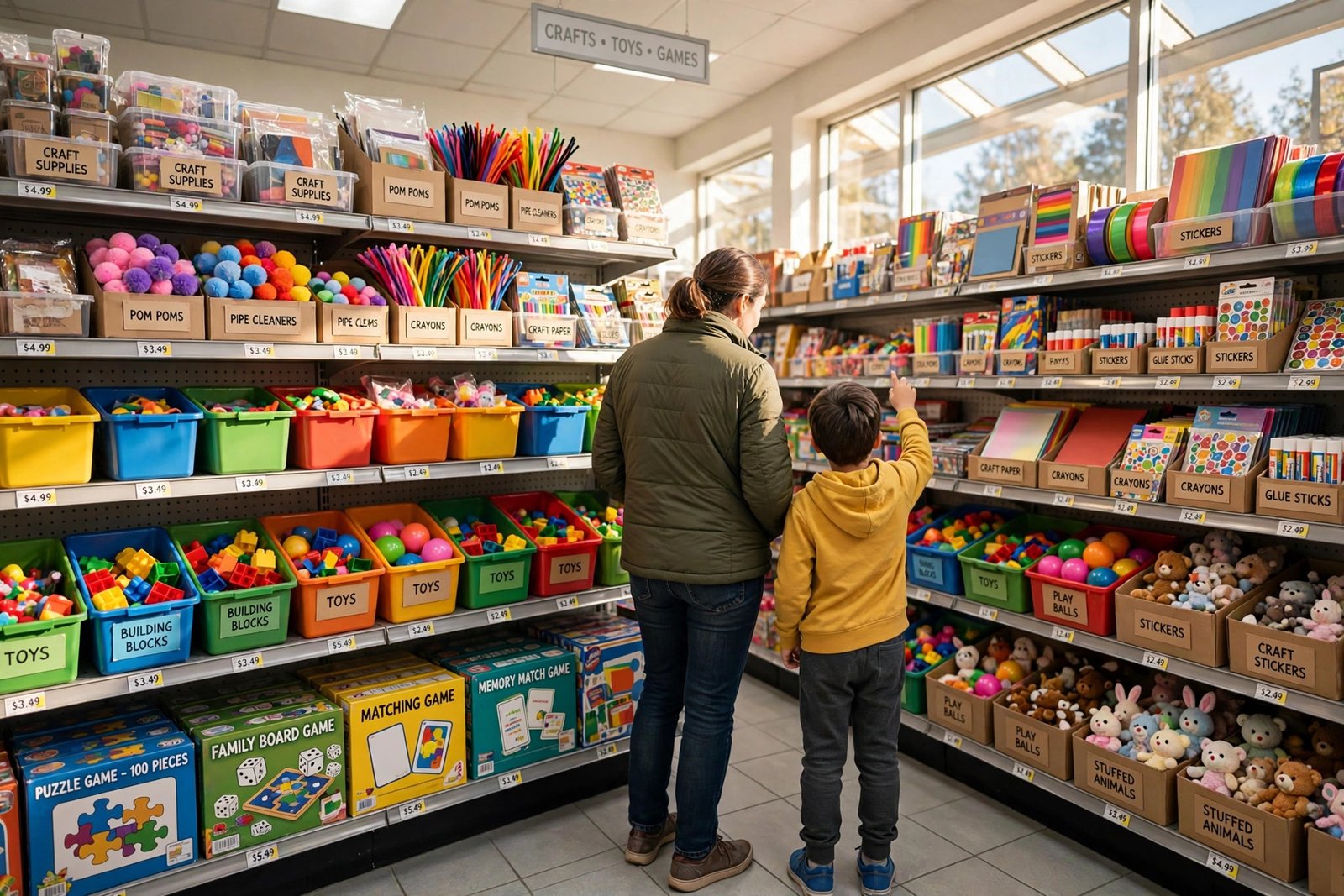
Shopping for kids can be fun, expensive and overwhelming at the same time. A discount store can be a useful place to start, especially for a new hobby, a birthday gift, or a small reward. This guide is about Five Below as a shopping option for parents. Please note: this is an unofficial guide. Five Below Guide at fivebelow.site is not affiliated with, endorsed by, or connected to Five Below, Inc. Product availability, prices, store hours and selection vary by location and change over time, so always check in-store or on the official Five Below website before you visit for a specific item. Used well, a low-price store helps children explore creativity and learning. Without a plan, it can lead to items that break quickly or never get used.
Shop With a Simple Plan
Decide what kind of play you are shopping for before you leave home. Is it a quiet craft afternoon, an outdoor game, a board game for family night, or a gift for a classmate? A clear purpose helps you skip aisles that do not fit the goal. Set a simple budget and agree on it in advance if your child is coming with you. For example, allow one main item and one small extra, or a fixed total for the trip. This teaches decision-making and avoids arguments at the checkout. Think about space at home too: small sets and card games store easily, while larger or noisy toys need more room. Keep receipts and packaging until you know the item works.
Choose Age-Appropriate Toys
Age labels on packaging are a starting point, not a perfect rule. Children develop at different speeds, and interests matter as much as age. A younger child who loves building may enjoy a slightly more advanced set with help, while an older child may still love a simple creative kit. For toddlers and preschoolers, look for large pieces, simple controls and sturdy construction. Avoid very small parts, long cords, sharp edges and pieces that could break off easily. Soft toys, chunky blocks, simple puzzles and push or pull toys are often good choices. For school-age children, look for toys that encourage problem-solving and imagination: building sets, simple science kits, drawing supplies and beginner board games. For tweens, involve them in the choice, since an item they pick themselves is far more likely to be used.
Safety Checks Every Parent Should Do
Safety comes before price, every time. Start by reading the packaging carefully. Look for age guidance, warnings about small parts, and notes about batteries, magnets or materials. If packaging is damaged or safety information is missing, choose a different item. In the store, give the item a quick hands-on check when possible. Are seams strong? Do small parts feel firmly attached? Are edges smooth rather than sharp? Does paint or coating look even and intact? If a toy feels flimsy or has loose parts, leave it behind. At home, check again before play: remove packaging, test moving parts, and make sure battery compartments close securely. Stay nearby the first time a child tries a new craft kit or item with glue or scissors.
Crafts by Interest
Crafts offer strong value because the process matters as much as the finished product. A child does not need an expensive kit to enjoy making something. For children who love drawing, sketchbooks, coloured pencils, markers and sticker sets are flexible, easy to store and useful for school as well as free play. For hands-on builders, modelling materials and simple build-your-own projects can be rewarding. Choose projects with a clear end result but room for personal touches, so the child feels ownership over what they create. For messy or sensory play, choose washable materials where possible, cover the table, and plan clean-up together. For group crafts, pick activities many children can do at once.
Games for Family Time and Travel
Games are a smart purchase when they will be played more than once. Before buying, think about player count, round length and whether rules are easy to learn. A game that takes an hour to explain is unlikely to become a family favourite. Card games and compact travel games are excellent for trips and waiting rooms: light, easy to learn, and best with short rounds for younger players. Board games work well for family nights, especially when they encourage conversation or teamwork rather than only luck. Puzzles are another strong quiet-play option: choose a piece count that matches patience, not just age.
Avoid Common Parent Pitfalls
One common mistake is buying too many similar items at once. Five versions of the same kind of toy often lead to less play, not more. Choose one strong option, let your child enjoy it fully, and save other ideas for a future visit. Another pitfall is choosing purely by appearance. Bright packaging can be tempting, but durability and play value matter more: will it still be interesting after a week, and can it be used in different ways? Noise and mess are also worth considering honestly. A loud toy may be exciting in the store but tiring at home, and a kit with many tiny pieces may create more clean-up than enjoyment. Finally, remember that a low-price item is not a bargain if it breaks on day one. One well-chosen, sturdy item usually beats several fragile ones.
Frequently Asked Questions
Is Five Below a good place to buy kids toys? It can be, for trying new interests, party favours, travel entertainment and small gifts. For heavily used favourites, compare durability and read packaging carefully. Availability varies by store, so treat any specific item as unconfirmed until you see it in person.
How do I know if a toy is safe for my child? Check age guidance and warnings, inspect for loose parts and sharp edges, and supervise first use. If packaging is damaged or safety information is missing, choose another item. When in doubt, pick a simpler, sturdier option.
What crafts are best for beginners? Drawing supplies, sticker sets, simple building kits and washable art materials are good starting points. They are flexible, easy to store and forgiving for new makers. As confidence grows, children can move to more detailed projects.
